Best Meal Prep Containers for a Week of Family Lunches
Five meal prep container sets that portion a week of lunches, keep the sauce off the salad, and survive the fridge, the microwave, and the school bag.
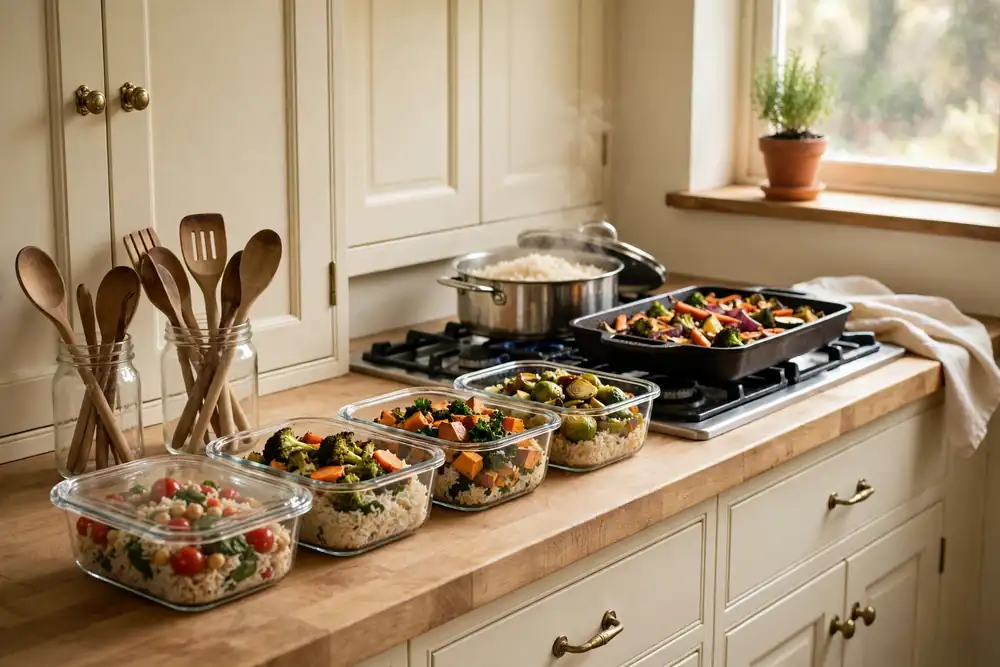
It is Sunday afternoon. The rice is cooked, the chicken is resting on the board, and there are two trays of roasted vegetables cooling on the stove. In front of me on the counter are ten empty containers, and the job is to turn this afternoon's cooking into lunches for the whole week. Five days, four people, and no morning scrambling for something to pack.
Finding the best meal prep containers took me longer than it should have, because I kept buying whatever was on sale. Lids leaked in the school bag. Sauce ran into the salad. One set stained orange the first time it met chili. What I have now is a clear idea of what a meal prep container has to do, and five sets that do it.
One honest note before we start: this page has affiliate links. If you buy through one, the site may earn a small commission. It costs you nothing, and it never decides what I recommend. I do not list prices here, because prices move and a stale price is worse than no price. Check the current price before you buy anything.
Top 3 picks
- Prep Naturals Glass Meal Prep Containers, 5-Pack, 34 oz (3-Compartment) — Best overall. Borosilicate glass, three compartments, oven safe with the lid off, five identical boxes for five weekdays. Check on Amazon
- Rubbermaid Brilliance Meal Prep Containers, 2-Compartment, 5-Pack — Best plastic. Crystal-clear Tritan, leak-proof latching lids, and a vent in the lid for the microwave. Check on Amazon
- Bentgo Classic All-in-One Bento Lunch Box — Best bento. Two stackable containers, utensils built into the lid, and a strap that keeps the whole lunch together. Check on Amazon
How I picked these
I cook every day for a family of four, and I have packed more school and work lunches than I can count. I have not bought and used every set on this list. These picks come from verified specs, maker details, and what I know from daily use about what a meal prep container has to survive: a week in the fridge, a ride in a bag, the microwave at lunchtime, and the dishwasher at night.
A container earns a place here if it does five things. The lid seals well enough that sauce stays in its own compartment. The box survives the freezer, the microwave, and the dishwasher. The boxes stack, so a week of lunches fits on one fridge shelf. And the size fits a real lunch, not a snack. Scores are my own judgement, not a copied rating.
The best meal prep containers at a glance
| Product | Material | Size | Best for | Check on Amazon |
|---|---|---|---|---|
| Prep Naturals Glass 5-Pack, 34 oz | Borosilicate glass | Five 34 oz | Best overall | Check on Amazon |
| Rubbermaid Brilliance Meal Prep 5-Pack | Tritan plastic | Five 2.85 cup | Best plastic | Check on Amazon |
| Bentgo Classic | BPA-free plastic | 3.5 cups total | Best bento | Check on Amazon |
| Freshware 15-Pack, 3-Compartment | BPA-free plastic | Fifteen 32 oz | Best value | Check on Amazon |
| Bayco Glass 9-Pack | Borosilicate glass | Nine, 20 to 33 oz | Best variety | Check on Amazon |
The picks
The set that wins is the one you reach for on a Sunday afternoon without thinking: a box that holds a whole meal, keeps its parts separate, and reheats in the same dish. Here are the five, in order.
The Prep Naturals set is the one I would buy first. Five identical glass boxes, one for each weekday, each with three compartments.

If glass is too heavy for the bag your lunch travels in, the Rubbermaid set is the answer. Same idea, half the weight, and the clearest plastic on this list. The vent in the lid is the detail you notice every lunchtime.

The Bentgo is a different kind of box: one lunch, packed well, with the fork already in the lid. It is the pick for the days nobody reheats anything.

The Freshware set is the answer when the question is how many boxes a family actually needs. Fifteen identical containers in one order, each one a full lunch with three compartments.

The Bayco set is for the weeks when one layout does not fit everyone. Three different boxes instead of nine copies of the same one: soup for one person, a full three-part meal for another, a small box for a child.

How a week of meal prep actually works
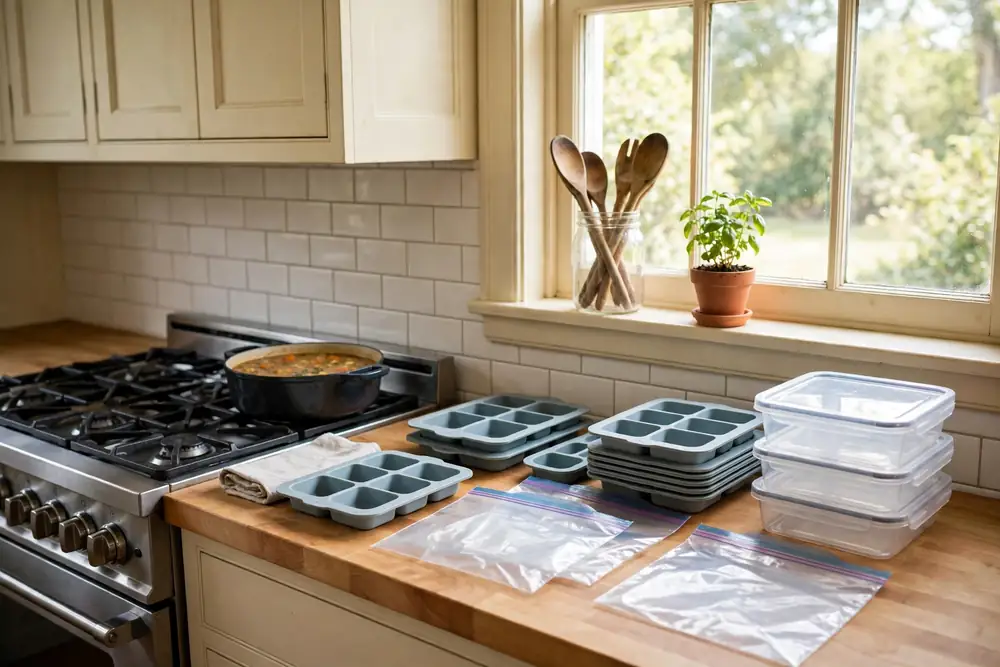
Sunday is the cooking day, and the routine is the same every week. I cook two mains, one grain, and two vegetables, and I let everything cool before it goes into a box. Hot food under a lid makes steam, and steam makes soggy lunches. Spread the food on trays to cool, then pack.
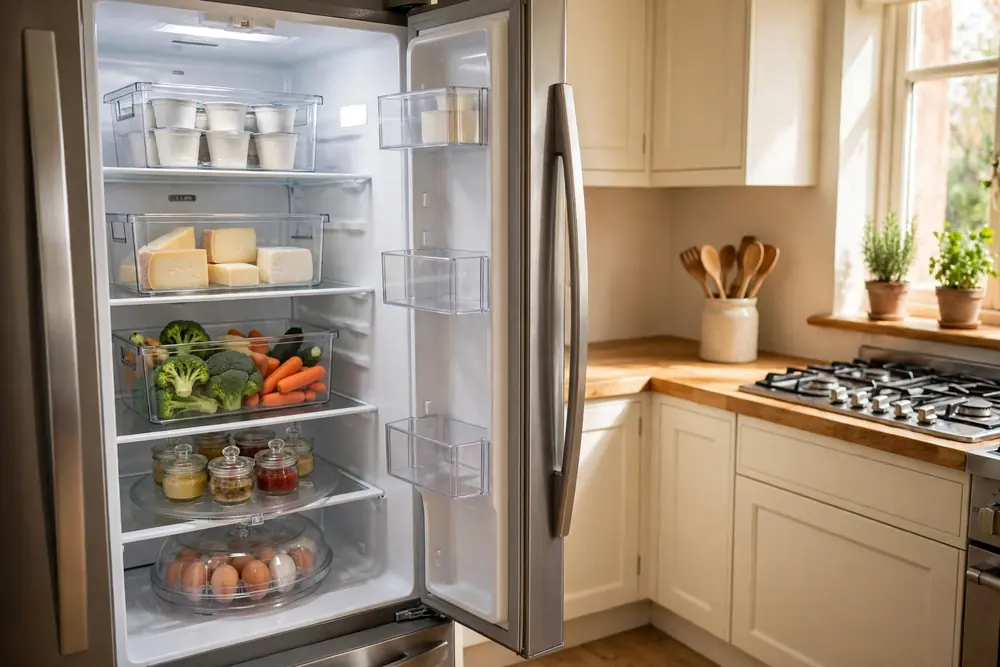
The fridge has a limit, and it decides how the week is split. Cooked food keeps three to four days in the fridge, so Sunday's cooking covers Monday to Wednesday. Thursday and Friday's lunches go straight into the freezer on Sunday, then move to the fridge the night before. If you want the exact numbers for each kind of food, I wrote down how long prepped food lasts in the fridge and the freezer.
Food gets into the fridge within two hours of cooking. Bacteria grow fastest between 40°F and 140°F, and two hours on the counter is enough time for them to get going. If the kitchen is hot, above 90°F, the window drops to one hour. The rest is the same handful of habits I use for everything in the fridge. Cool food fast, seal it tight, and store food so it lasts longer.
Reheating has one number to remember: 165°F. That is the temperature leftovers need to reach all the way through. Sauces, soups, and gravies go to a rolling boil. And keep the fridge at 40°F or below. A fridge that runs warm shortens every storage time on this page.
Compartments or one big box?
Compartments win when the meal has parts that should not touch. Rice in the big section, chicken on top of it, salad in a small section, fruit in the other. The sauce stays off the salad, the fruit stays dry, and the lunch still looks like a meal at noon. Compartments also portion for you: the big section is the main, the small ones are the sides. For kids, compartments matter even more. Food touching is a dealbreaker for plenty of children, and a divided box ends that argument before it starts.
One big box wins when the meal is one dish. Soup, stew, pasta, curry, a grain bowl. Anything you would eat from a single bowl at home belongs in a single box. A big box is also more flexible, and easier to wash, because there are no divider corners to scrub.
My rule is simple. If the meal has parts, buy compartments. If the meal is one dish, buy a single box. Most families need both, which is why the Bayco set mixes the two.
Glass or plastic?
Glass wins for anything hot, anything acidic, and anything that sits in the fridge for days. Tomato sauce, curry, and chili stain plastic and leave a smell that survives the dishwasher. Glass shrugs them off. Glass also goes in the oven, so a meal reheats in the same box it was stored in. The cost is weight and breakability. A glass container full of lunch is heavy, and a drop on a hard floor can end it.
Plastic wins for anything that travels and anything a child carries. It is light, it bounces, and good plastic does not stain the way cheap plastic does. The cost is the oven. Plastic never goes in the oven. Plastic also ages: lids warp, seals loosen, and after a few years the set that once sealed tight starts to weep.
Glass at home, plastic on the move. The Prep Naturals set lives in my fridge. The Rubbermaid and Freshware sets live in lunch bags. For the everyday leftovers that are not portioned meals, the pot of soup, the half a casserole, my guide to the best food storage containers covers the sets that do that job.
What to check before you buy
The lid first. A container is only as good as its lid. Latching lids with a silicone gasket seal best, and they are the only kind I trust with soup in a bag. Snap-on lids are fine for the fridge and for dry food. If a lid takes effort to close, it will seal. If it slides on with no resistance, it will leak.
The size second. A full adult lunch needs 28 to 34 ounces. The Prep Naturals boxes are 34 ounces, the Freshware boxes are 32, and the Bentgo holds 3 1/2 cups in total. A 20-ounce box is a light lunch or a child's lunch. Check the size against your lunch bag too.
The compartments third. Fixed dividers keep food apart better than removable ones, because there is no gap for sauce to sneak under. Check the divider height. A low divider lets food mix the moment the box tips. A divider that reaches the lid keeps the sections truly separate. If you pack a lot of soup, buy at least one single-compartment box.
The footprint fourth. Rectangles stack better and waste less fridge space. Five boxes in a row should fit on one shelf, and the lids should sit flat enough to stack a second row on top. Measure the shelf before you order. Most of these boxes are 7 to 9 inches long, so two rows fit on a standard shelf.
The washing fifth. Every set here is dishwasher safe in the base. The lids are the question. Glass-set lids and the Bentgo lids last longer hand washed. Plastic lids go on the top rack, never the bottom, which runs hot enough to warp thin plastic.
The count last. Count containers, not pieces. A 10-piece set is five containers. A family of four packing five lunches a week needs twenty boxes, or fifteen and a midweek wash.
Looking after them
Glass. Dishwasher safe, top or bottom rack. The one rule is thermal shock: do not move glass straight from the freezer into a hot oven, and do not put a hot glass dish on a cold wet counter. Let it come to room temperature first. A chip on the rim is the end of a glass container.
Plastic. Top rack only in the dishwasher, lids included. Keep plastic away from the oven and the stove edge. If a container stains, a paste of baking soda and water left on the stain for an hour lifts most of it. If a lid warps and will not seal, replace the lid, not the whole set.
Compartment boxes. The divider corners collect food. A bottle brush or an old toothbrush gets into them, and a quick rinse before the dishwasher stops dried sauce from setting.
Bentgo. Hand wash the lids, the divider, and the strap. The containers go in the dishwasher and the microwave, but the strap will not survive either.
Lids, all kinds. Store lids upright in a file holder or a deep drawer divider, not stacked in a pile. Check the silicone gasket on a latching lid now and then. If it is cracked or loose, the seal is gone.
Questions people ask
How many meal prep containers do I need?
Count lunches, not people. One person packing five lunches needs five boxes. A family of four needs twenty, or fifteen and a wash halfway through the week.
How long does meal prep last in the fridge?
Cooked food keeps three to four days in the fridge in a sealed container. Freeze Thursday and Friday's lunches and move them to the fridge the night before.
Can I put meal prep containers in the microwave?
Glass, yes, with the lid off or vented. Microwave-safe plastic, yes, with the lid cracked or the vent open. Take the Bentgo lids off first, and never microwave a container that is not marked microwave safe.
Are plastic meal prep containers safe?
The sets on this list are BPA-free, and plastic marked microwave safe is fine for reheating. If a container is old, stained, or warped, reheat in glass instead.
Is glass or plastic better for meal prep?
Glass is better for food that stays home: it does not stain, does not hold smells, and goes in the oven. Plastic is better for food that travels: it is light and it bounces.
Can I freeze food in meal prep containers?
Yes. Glass and plastic both freeze well. Leave a little headspace, because food expands as it freezes, and move the box to the fridge the night before so it thaws safely. Frozen leftovers keep their best quality for two to three months.
How do I stop sauce leaking into the other compartments?
Use a latching lid and press all four corners down firmly, so the seal meets the divider. Keep the box upright in the bag. Thick sauces stay put better than thin ones.
What size meal prep container is best?
32 to 34 ounces for a full adult lunch, with compartments for a main and two sides. 20 ounces is a light lunch or a child's lunch.
The bottom line
If you buy one set, buy the Prep Naturals glass 5-pack, 34 ounces, three compartments. A full meal in one box, glass that goes from freezer to oven, and five identical boxes that turn Sunday afternoon into a week of lunches.
If you buy a second set, buy the Freshware 15-pack. Fifteen boxes in one order, light enough for every bag in the house, and cheap enough per box that losing one to a school locker is not a disaster.
And if you buy nothing, you still have the useful part. Pack on Sunday, freeze Thursday and Friday, and eat what is in the fridge by Wednesday. Buy compartments when the meal has parts, a plain box when it is one dish. Check the lid before you check anything else.