Best Food Storage Containers for Everyday Kitchens
Glass and plastic containers that actually seal, stack, and survive daily family use — five sets picked for real leftovers, lunches, and meal prep.
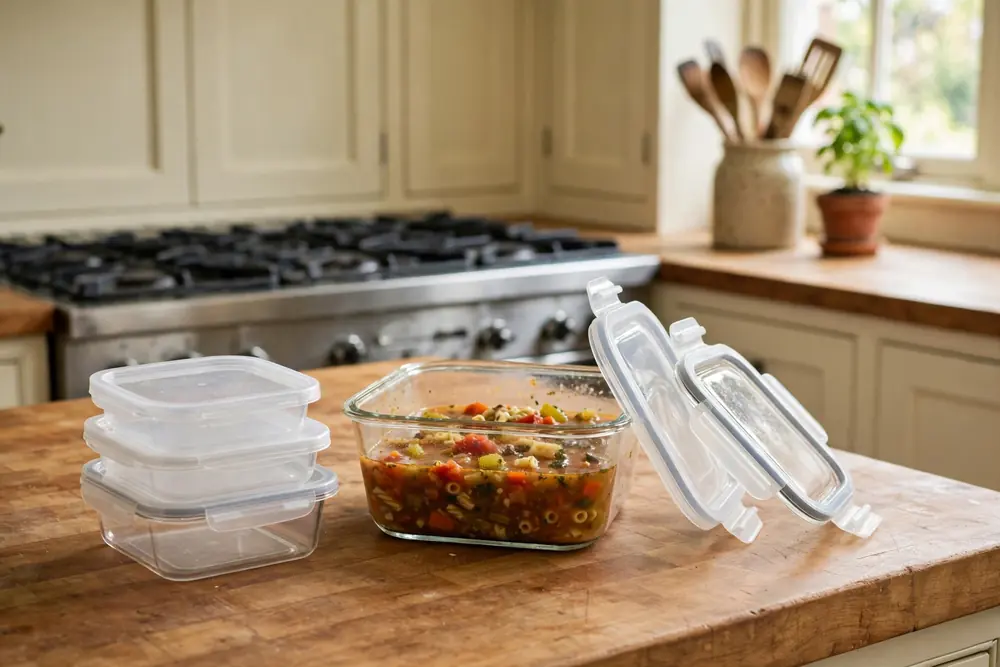
It is Sunday night. Dinner is done, the kids are finally winding down, and there is a pot of soup on the stove that needs to go away before morning. You open the cupboard and the whole mess falls out at you. A lid with no container. A container with no lid. Three round ones that do not stack. One square one stained orange from the chili you made two weeks ago, and you know it will never come clean.
Finding the best food storage containers took me longer than it should have, because I kept buying whatever was on sale and hoping it would work out. It did not work out. What I have now is a small set of containers I actually trust, and a clear idea of what makes one good and another one a waste of shelf space. This page is that idea, written down.
Top 3 picks
- Glasslock Ring Taper 24-Piece Set — Best overall. Tempered glass, four-latch lids that hold soup sideways, and glass that goes from the fridge into a 450°F oven with the lid off. Check on Amazon
- Rubbermaid Brilliance 44-Piece Set — Best plastic. Clear Tritan, leak-proof latches, and a vent in the lid for the microwave. Check on Amazon
- Pyrex Simply Store 18-Piece Set — Best value glass. A complete glass set that does the everyday job for years, for less money. Check on Amazon
How I picked these
I cook every day for a family of four, and I have lived with glass and plastic containers for years: the stained ones, the warped ones, the ones whose lids gave up after six months. I did not run these five sets through a lab, and I will not pretend I did. I picked them from verified specs, maker details, and what I know from daily use about what a container has to survive: tomato sauce, the freezer, the microwave, the dishwasher, and a lunch bag tossed in the back of the car.
A container earns a place here if it does four things. The lid seals well enough that soup stays inside. The base survives the freezer, the microwave, and the dishwasher. The shapes stack or nest so they do not eat the whole cupboard. And the set covers the sizes a family actually uses, from a cup of dressing to a pot of soup. Scores are my own judgement, not a copied rating.
The best food storage containers at a glance
| Product | Material | Pieces | Best for | Check on Amazon |
|---|---|---|---|---|
| Glasslock Ring Taper 24-Piece Set | Tempered glass | 24 | Best overall | Check on Amazon |
| Pyrex Simply Store 18-Piece Set | Tempered glass | 18 | Best value glass | Check on Amazon |
| OXO Smart Seal Glass Everyday 16-Piece Set | Borosilicate glass | 16 | Best for small portions | Check on Amazon |
| Rubbermaid Brilliance 44-Piece Set | Tritan plastic | 44 | Best plastic | Check on Amazon |
| Stasher Silicone Bags 4-Pack | Platinum silicone | 4 | Best reusable bags | Check on Amazon |
The glass sets
Glass is the workhorse in my kitchen. It does not stain, it does not hold smells, and it goes from the fridge to the microwave to the oven without a second dish. The trade is weight. A full glass container is heavy, and glass can break if you drop it on a tile floor. For everything that stays in the house, glass wins.


The plastic set
Plastic earns its place for one reason: weight. A plastic container full of soup weighs half what the same soup weighs in glass, and it will not shatter if it falls off a counter. That matters for lunch bags, for kids, and for anyone whose wrists complain about lifting a full glass dish. The trick is buying good plastic. Cheap plastic warps in the dishwasher, stains orange, and holds the smell of last week's curry. Good plastic does none of that.

The reusable bags
Rigid containers are not the whole answer. A freezer full of boxes wastes space, and a lunch bag has no room for a hard container once the water bottle goes in. Silicone bags fill that gap. They lie flat, they freeze flat, and they replace the box of disposable bags in the drawer.

Glass or plastic: which one for which job
Materials matter in storage the same way they matter in cooking. I wrote about how stainless steel and aluminum behave on the stove, and the same idea applies here: pick the material for the job, not for the habit.
Glass wins for anything hot, anything acidic, and anything that sits in the fridge for days. Tomato sauce, curry, and chili stain plastic and leave a smell that survives the dishwasher. Glass shrugs them off. Glass also goes in the oven, which means one dish from storage to table. The cost is weight and breakability. A glass container full of soup is heavy, and a drop on a hard floor can end it.
Plastic wins for anything that travels and anything a child carries. It is light, it bounces, and good Tritan does not stain the way cheap plastic does. The cost is the oven. Plastic never goes in the oven, and it should not go near a hot stove edge either. Plastic also ages: lids warp, seals loosen, and after a few years the set that once sealed tight starts to weep.
My rule is simple. Glass at home, plastic on the move. The Glasslock set lives in my fridge. The Brilliance set lives in lunch bags. The Stasher bags live in the freezer. Nothing in my kitchen does every job, and that is fine.
What to check before you buy
The lid first. A container is only as good as its lid. Latching lids with a silicone gasket seal best, and they are the only kind I trust with soup in a bag. Snap-on lids are fine for the fridge and for dry food. Press the lid on in the store if you can. If it takes effort to close, it will seal. If it slides on with no resistance, it will leak.
The shape second. Rectangles stack better and waste less fridge space. Rounds heat more evenly in the microwave, because there are no corners for cold spots to hide in. I keep both: rectangles for the fridge shelf, rounds for reheating.
The sizes third. A family of four uses three sizes most: small (1 to 2 cups) for sauces, dressings, and leftovers for one; medium (3 to 4 cups) for a side dish or a lunch; large (6 to 7 cups) for a pot of soup or a batch of pasta. A set that gives you all three is worth more than a set of twelve identical containers.
The lid count. Count lids, not pieces. A 44-piece set is 22 containers, and a 24-piece set is 12. The piece count on the box counts every lid as a piece, which makes a set sound twice as big as it is. Check how many containers you actually get, and whether the lids stack or nest for storage.
Dishwasher safe, and where. Most lids are top-rack dishwasher safe. The bottom rack runs hotter, and heat is what warps plastic lids over time. If a lid says hand wash only, believe it.
Dry goods are a different job. Flour, sugar, pasta, and cereal want tall canisters with a wide mouth, not leftover containers. If your problem is the pantry rather than the fridge, I put the dry-goods picks together in my guide to the best pantry storage containers.
Looking after them
Glass. Dishwasher safe, top or bottom rack. The one rule is thermal shock: do not move glass straight from the freezer into a hot oven, and do not put a hot glass dish on a cold wet counter. Let it come to room temperature first, or let the oven heat with the dish inside it. A chip on the rim is the end of a glass container. Do not keep using it.
Plastic. Top rack only in the dishwasher, lids included. Keep plastic away from the oven and the stove edge. If a container stains, a paste of baking soda and water left on the stain for an hour lifts most of it. If a lid warps and will not seal, replace the lid, not the whole set. Most brands sell replacement lids.
Silicone bags. Turn them inside out in the dishwasher so the water reaches the corners. Dry them open, propped on a bottle or a drying rack, or they stay damp inside. A bag that smells after washing needs a soak in hot water with a spoonful of baking soda.
Lids, all kinds. Store lids upright in a file holder or a deep drawer divider, not stacked in a pile. A pile of lids is where lids go to be forgotten. And check the silicone gasket on a latching lid now and then. If it is cracked or loose, the seal is gone, and the container is a bowl with a hat.
Questions people ask
Are glass containers better than plastic?
For food that stays home, yes. Glass does not stain, does not hold smells, and goes in the oven. Plastic is better for travel, for kids, and for anyone who needs a light container. Most kitchens do best with both.
Can I put food storage containers in the oven?
Glass, yes, with the lid off and within the maker's temperature limit. Glasslock glass is oven safe to 450°F. Plastic never goes in the oven. Silicone bags go in the oven up to their own limit, 425°F for Stasher. Always take the lid off first.
Is it safe to microwave food in plastic containers?
Microwave only in containers marked microwave safe, and open the vent or crack the lid so steam escapes. BPA-free Tritan is microwave safe. If a plastic container is old, stained, or warped, microwave in glass instead. When in doubt, glass is the safe choice.
How do I stop tomato sauce staining my containers?
Use glass for tomato sauce, curry, and anything with turmeric. Glass does not stain at all. Good Tritan resists stains far better than cheap plastic. For a stain that already happened, baking soda paste and an hour of patience lifts most of it.
How long do leftovers last in the fridge?
Cooked leftovers keep three to four days in the fridge in a sealed container. After that, freeze them or let them go. A good seal keeps food fresh for the full stretch. A loose lid dries food out and lets fridge smells in.
Do airtight containers really keep food fresh longer?
Yes. Air is what dries food out and carries smells around the fridge. A container that seals tight keeps moisture in and fridge air out, so leftovers taste like themselves on day three instead of tasting like the fridge.
What sizes do I actually need?
Three: small (1 to 2 cups) for sauces and single portions, medium (3 to 4 cups) for sides and lunches, and large (6 to 7 cups) for soup and batch cooking. If you buy one set, buy the one that covers all three sizes.
Why do my plastic lids warp?
Heat. The bottom rack of the dishwasher runs hot enough to warp thin plastic over time, and so does a lid left near a hot stove. Wash lids on the top rack, keep them away from heat, and replace a warped lid instead of fighting it.
The bottom line
If you buy one set, buy the Glasslock Ring Taper 24-piece set. It is the set that does the most jobs well: soup that travels, leftovers that reheat in the same dish, and glass that still looks new years from now.
If you buy a second set, buy the Rubbermaid Brilliance 44-piece set. It is the plastic that goes out of the house, into lunch bags and to potlucks, without the staining and warping that gives plastic a bad name.
And if you buy nothing, you still have the useful part. Check the lid before you check anything else. Buy rectangles for the fridge and rounds for the microwave. Keep glass at home and plastic on the move. And count containers, not pieces, before you believe the number on the box.