Bodum French press recall: check your press before your next cup
Bodum has recalled about 5.9 million French presses after 70 glass carafes broke during use. Here is how to check yours tonight, what the free fix is, and which spoon to use from now on.
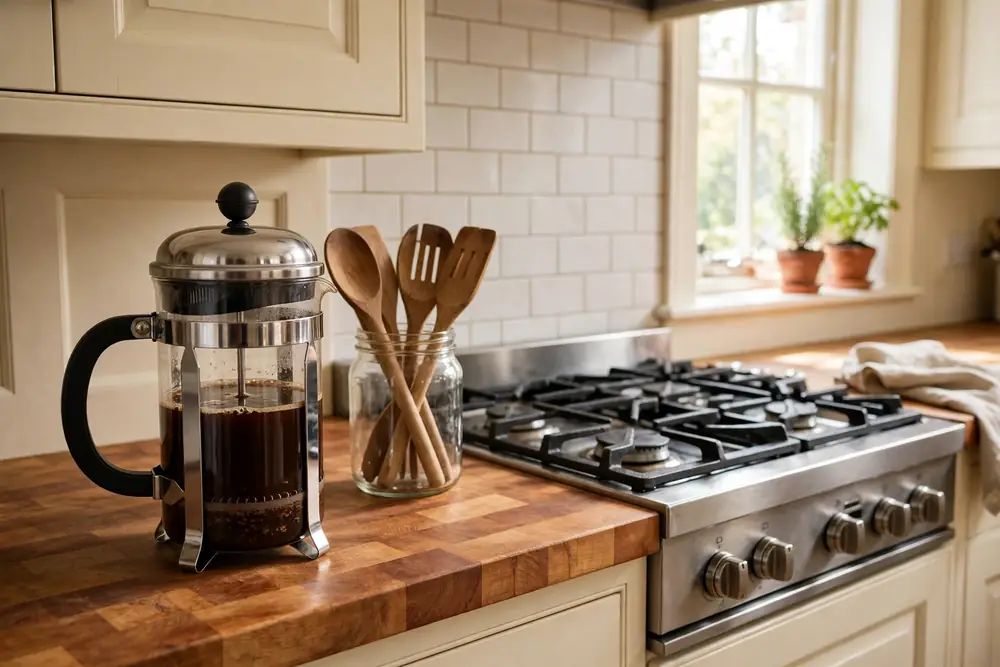
It is early morning and the kettle has just boiled. You pour the water over the grounds, reach for the spoon in the jar, give the coffee a stir, and set the lid on top to let it brew. It is the same routine every morning. You do not think about the glass. You think about getting the kids up and getting breakfast on the table.
That routine is exactly what the Bodum French press recall is about. The spoon you stir with can damage the glass carafe, and a damaged carafe can break while it is full of hot coffee. This is not a scare story. It is a simple check you can do tonight, in about two minutes, and then you can go back to your coffee.
The short answer
On October 29, 2026, the US Consumer Product Safety Commission announced a recall of about 5.9 million Bodum French press coffee makers with replaceable glass carafes, in 8-cup and 12-cup sizes. The glass carafe can break unexpectedly during use if it is damaged or cracked, including by stirring with a metal spoon, and that poses a risk of serious burn injuries. Bodum received 70 reports of carafes breaking during use, including 48 reports of burns. The fix is a free plastic stirring spoon and a warning label. There is no refund and no replacement press. Check your carafe for cracks, stop stirring with metal, and request the free spoon. (CPSC recall #27-055)
Which presses are covered
The recall covers Bodum French presses with replaceable glass carafes in two sizes and eight model lines. If your press has a glass carafe you can lift out of the frame, and the name on it is one of the eight below, it is covered.
| What to check | The details |
|---|---|
| Sizes | 8-cup and 12-cup, with replaceable glass carafes |
| Model lines | Bistro, Brazil, Caffettiera, Chambord, Crema, Java, Jesper, Kenya |
| Years sold | 1974 through October 2026 |
| Price when sold | About $15 to $65 |
| Where sold | Target, Walmart, Amazon, coffee and home goods stores, and online at Bodum.com, Target.com, Walmart.com, and Amazon.com |
| Made in | Portugal and Thailand |
| Importer | Bodum USA, Inc., New York, New York |
| Recall number | CPSC #27-055, announced October 29, 2026 |
That window is the part that catches people out. These presses have been sold in the United States since 1974, so a press you inherited from your mom and a press you bought this autumn can both be covered. The price range tells you the same thing from the other side: this is not one expensive model. It is the everyday press most of us have owned at some point. (CPSC recall #27-055; Hexroast)
If you are not sure which model you have, look for the name printed on the frame or the base, or check the box if you still have it. The recall website also has photos and model identification help, which I will link to below.
Why a metal spoon matters
Glass looks solid, but it is not forgiving. A metal spoon is hard, and the inside of a glass carafe is smooth and thin. Every time a metal spoon taps or scrapes the glass, it can leave a tiny chip or a hairline crack you cannot see without looking for it.
That matters because of what happens next. A cracked carafe is still holding together. Then you pour in near-boiling water. The glass heats up fast and unevenly, and the plunger pushes down on it. The crack is the weak spot, and the weak spot is where the glass gives way. When it fails, it fails all at once, with a full carafe of hot coffee and broken glass in your hands and on your counter.
The CPSC notice says the same thing in its own words: the glass carafe can break unexpectedly during use if it is damaged or cracked, including by use of a metal spoon to stir the coffee, posing a risk of serious burn injuries. (CPSC recall #27-055)
It is worth keeping the numbers in proportion. Seventy reports out of about 5.9 million presses is roughly one report for every 84,000 presses. Most presses will never break. But a burn from a full carafe of hot coffee is a bad injury, and the fix here costs you nothing and takes two minutes. That is a good trade.
One thing the notice does not tell us: it does not say how many of the 70 breakages involved a metal spoon, or how severe the 48 burns were. I am not going to guess at either. What we know is the hazard, the numbers, and the fix, and that is enough to act on.
How to check your carafe for cracks and chips
Do this tonight, before your next brew. It takes two minutes and no tools.
- Empty the press completely. Tip out the grounds and rinse the carafe. You cannot see a hairline crack through coffee.
- Take the carafe out of the frame. Hold it up to a window or a bright light and turn it slowly. A crack catches the light. Look at the whole surface, not just the bottom.
- Run a finger along the rim. Go slowly, all the way around. A chip on the rim feels like a rough spot or a tiny nick. That counts as damage, even if you cannot see it.
- Check the base and the lower sides. This is where a spoon taps hardest and where the carafe knocks against the sink. Look for star-shaped chips, short lines, and cloudy marks that do not rinse off.
- Look at the spout. Chips love edges, and the spout is an edge that gets knocked every time you pour.
What counts as damage? Any crack, even a hairline one. Any chip, even a small one on the rim. Any star-shaped mark. Any cloudy patch that will not wash off and feels rough under your finger. If you find any of those, stop using that carafe. Do not brew one more pot in it to see if it holds. Glass does not warn you twice.
If the carafe looks and feels clean, it is fine to keep using, with a plastic or wooden spoon from now on.
What to do
There are three things to do, and they are all simple.
First, stop stirring with metal. Put the teaspoon back in the drawer. From now on, stir your French press with a plastic or wooden spoon. This is the single change the recall is asking for, and it is the one that protects the glass.
Second, request the free spoon and warning label. Bodum USA is sending owners a free plastic stirring spoon and a warning label. That is the whole remedy. It is classed as a repair, not a refund and not a replacement. You keep your press. Contact Bodum USA at 888-879-8213, Monday to Friday, 8am to 5pm Eastern, or email [email protected], or go online at bodumfrenchpressrecall.expertinquiry.com or Bodum.com under "Recall Information". Keep the recall number with your note to yourself: 27-055. It is the fastest way for anyone helping you to find the right notice. (Medical Daily; CPSC recall #27-055)
Third, if your carafe is already cracked, stop using it. Do not use a cracked or damaged carafe. The recall does not include a replacement carafe, so a cracked one is a press that needs a new carafe from Bodum or a new press altogether. I know that is annoying to hear. But a cracked carafe full of hot coffee is not worth the risk, and no spoon fixes a crack that is already there.
And while you are in checking mode, here is the other kitchen recall I have written up: the Gourmia air fryer oven recall. If you own one of those too, it is worth five minutes of your evening.
French press habits that keep you safe
The recall changes one habit. A few more habits make the press safer to live with long term.
Use a plastic or wooden spoon. This is the big one. A wooden spoon from the jar by the stove does the job perfectly, and it cannot chip glass. A plastic spoon works the same way. Metal stays in the drawer for everything else.
Never plunge a damaged carafe. If you find a crack, the press is done until the carafe is replaced. Plunging pushes down on the glass. Pushing down on cracked glass is asking it to fail while your hands are right there.
Use a coarse grind. Fine grounds slip through the mesh and make you push harder on the plunger. Coarse grounds stay put, the plunger moves smoothly, and you never have to force it. If the plunger resists, stop. Lift it, give the coffee another stir with your wooden spoon, and try again gently. Forcing it is how accidents happen.
Use water just off the boil. Let the kettle sit for half a minute after it clicks off. The coffee tastes better, and the glass gets a slightly gentler shock than a rolling boil straight from the kettle.
Check the carafe now and then. Not every day. Once a month is plenty. Hold it to the light when you wash it, run a finger round the rim, and you will catch a chip long before it becomes a problem.
Questions people ask
Is this the same as the Starbucks French press recall?
No. That was a different product and a different hazard, back in 2019. This recall is about Bodum presses with replaceable glass carafes, and the hazard is the glass breaking during use. If you have a Starbucks press, this recall does not cover it. If you have a Bodum press, the Starbucks recall does not cover it.
Do I get my money back?
No. The remedy is a repair, not a refund. You get a free plastic stirring spoon and a warning label, and you keep your press. There is no replacement carafe and no replacement press in the recall.
What if I bought mine years ago?
It is still covered. These presses were sold from 1974 through October 2026, so an old press is in scope just like a new one. Age does not take you out of the recall. If anything, an older carafe has had more years of spoons tapping it, so it is the one most worth checking.
What if my carafe is cracked?
Stop using it. Do not brew in it again. The recall does not include a replacement carafe, so you will need a new carafe or a new press. A cracked carafe is the one case where the free spoon does not solve the problem.
Do I have to stop using my press while I wait for the spoon?
The CPSC notice says to stop stirring with metal spoons or utensils. It does not say to stop using the press. If your carafe is undamaged and you stir with plastic or wood, you can keep brewing. The spoon Bodum sends is a convenience, not a permission slip. Use a wooden spoon from your own jar in the meantime.
How do I know if my model is one of the eight?
The eight lines are Bistro, Brazil, Caffettiera, Chambord, Crema, Java, Jesper, and Kenya. The name is usually printed on the frame or the base. The recall website has photos and model identification help if the name has worn off.
The bottom line
Tonight, empty your press and hold the carafe up to the light. If it is cracked or chipped, stop using it. If it is clean, keep it, and stir with wood or plastic from now on. Then request the free spoon and label from Bodum, and keep the recall number, 27-055, with your note.
That is the whole job. Two minutes of checking, one habit changed, and your morning coffee is safe again.